

7 Ways Staff Name Tags Improve Guest Communication
Quick Summary
Staff name tags improve guest communication by letting guests know exactly who to address, which removes hesitation about asking for help. A visible first name also makes conversations feel more personal, builds trust, and gives guests someone specific to thank or hold accountable.
- A 2024 study found individual name tagging can improve interprofessional communication and may help enhance patient safety.
- Place the tag on the upper right chest, where guests look first during a greeting.
- Train staff to introduce themselves by name, invite guests to use it, and close interactions by name.
- Use a first name plus role for accountability, not a last name or personal contact details.
- Test tag readability in the actual lighting where staff will wear it before ordering a full set.
Table of Contents
- Why Staff Name Tags Change the Guest Conversation
- How Name Tags Build Trust and Rapport With Guests
- Name Tag Best Practices for Customer Service
- Making Name Tags Easy for Guests to Read
- What Staff Should Put on a Name Tag
- Employee Name Tag Policy: Setting Clear Expectations
- Choosing Durable Materials for Your Team's Name Tags
- Ordering Your Guest-Facing Name Tags Next
- Frequently Asked Questions
Why Staff Name Tags Change the Guest Conversation
Guests hesitate to ask for help when they don't know who to address. A simple name tag removes that friction, and many businesses find the change starts the moment a guest walks in. At Tag UR It! Inc., we've seen how a clear name on a shirt turns a silent transaction into a real exchange, and that starts with the basics of what the study on name tags for operating-room staff found about interprofessional communication. A 2024 study on name tags for operating-room staff found that individual name tagging can improve interprofessional communication and may help enhance patient safety (The Power of The (First) Name).
That finding matters outside the hospital. Anywhere people depend on fast, accurate communication, knowing who is who saves time and reduces mistakes.
Name tags also shift who holds the conversation. A guest who reads "Maria" on a badge can say "Maria, can you help me?" instead of waving someone down. That small change makes the exchange feel more personal and less transactional.
How Name Tags Build Trust and Rapport With Guests
Trust grows when guests feel known and can identify who is responsible for their experience. A name tag tells them who to thank and who to hold accountable if something goes wrong.
Name tags help in three main ways:
- Accountability: Guests know exactly whom to contact about a problem.
- Familiarity: Using a first name on a return visit creates warmth.
- Approachability: A visible name signals that staff are open to conversation.
Name Tag Best Practices for Customer Service
The right name tag supports good service. The wrong one gets ignored, and even a well-made tag does nothing if staff treat it as a passive label. The gap most guides skip is training: teaching staff to use the name as a conversation tool rather than just wearing it.
Placement and Presentation Basics
- Show the first name, and add the last name or title only when it fits your setting.
- Place the tag on the upper right chest, where guests look first during a handshake or a greeting.
- Keep the tag clean, straight, and in good repair.
- Use the same style across the whole team so the group looks unified.
Good practice also means checking the tag at the start of every shift. A bent or faded badge sends the wrong signal, even when the service behind it is strong.
Training Staff to Use the Name, Not Just Wear It
A name tag becomes a communication tool only when staff are taught three habits:
- Introduce with the name. A greeting that pairs eye contact with "I'm Maria, let me know if you need anything" gives the guest a name to use later.
- Invite the guest to use it. Phrases like "Ask for me by name at the desk" lower the barrier for a guest who might otherwise stay silent.
- Close the loop by name. Thanking a guest and repeating their name, and signing off with your own, turns a transaction into a remembered exchange.
Connecting the Tag to Feedback
A name on a badge also gives guests a specific person to mention in a review or survey.
Watch out: staff should never be required to share a last name or personal contact information on a guest-facing tag, a first name plus role is enough for accountability, and it protects employee privacy.
The table below summarises the three habits the article says staff need to turn a name tag into a conversation tool.
| Habit | What staff do | Why it helps |
|---|---|---|
| Introduce with the name | Pair eye contact with "I'm Maria" | Gives the guest a name to use later |
| Invite the guest to use it | Say "Ask for me by name at the desk" | Lowers the barrier to asking for help |
| Close the loop by name | Thank the guest and sign off with your name | Turns a transaction into a remembered exchange |
Making Name Tags Easy for Guests to Read
A name tag only helps if guests can read it from a normal conversation distance, and that includes guests with low vision, older guests, and anyone reading in dim lobby or dining-room light.
Choosing Size, Font and Contrast
- Size: A name line set in roughly 3/8- to 1/2-inch cap height reads comfortably at conversation distance. Larger tags are easier to read, but they should still feel proportionate on the shirt.
- Font: Simple, bold sans-serif letters beat thin, decorative scripts. Avoid all-caps only when the name is long; mixed case is easier to parse quickly.
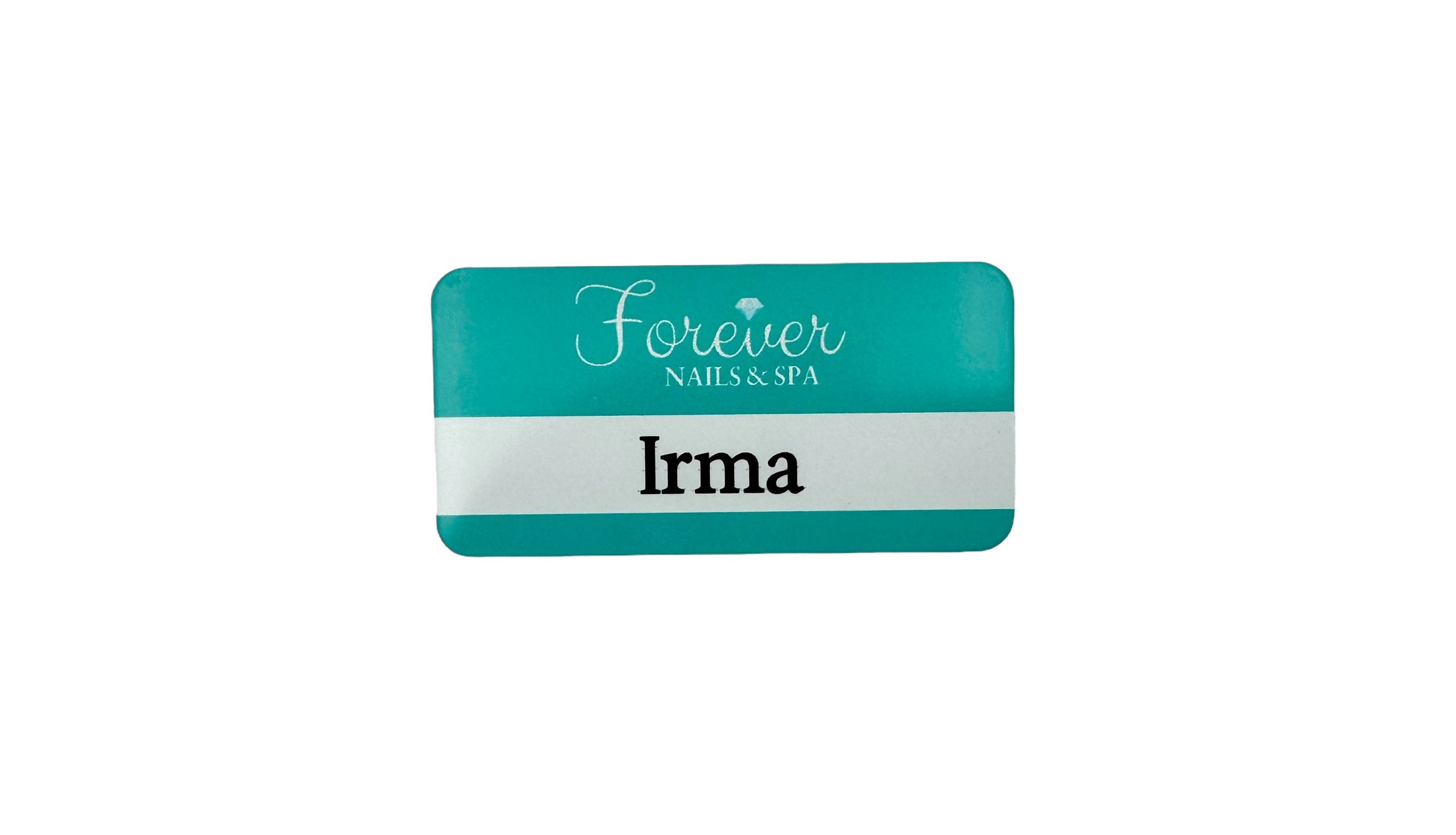
- Contrast: Dark text on a light background, or light text on a dark one, reads most clearly.
- Finish: Our Glossy White Aluminum Name Tag is one option with a glossy finish, and the Satin Silver Aluminum Name Tag offers a brushed finish in three sizes, so you can match the size to your setting.
Designing for Guests With Low Vision
Accessibility guidance generally recommends high contrast, large lettering, and uncluttered backgrounds for readers with low vision (Accessibility Information). Applied to a badge, that means keeping the name as the largest element and avoiding busy backgrounds behind the letters.
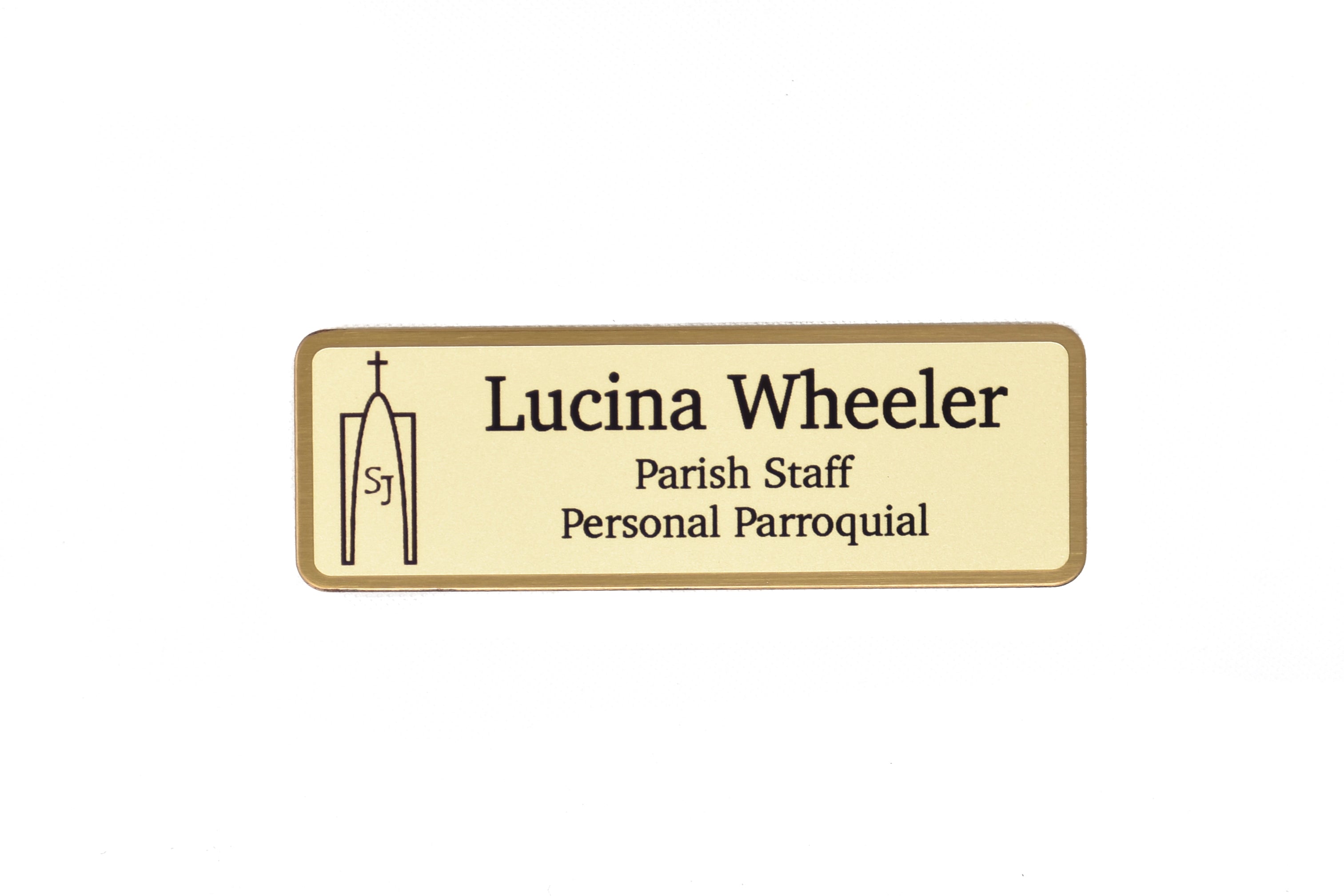
Watch out: a tag that reads well on a desk under office light can fail in a dim restaurant or a sunlit patio, test a sample in the actual lighting where staff will wear it before you order the full set.
What Staff Should Put on a Name Tag
Keep the tag focused. Too much text slows reading and clutters the design.
- First name, or full name where that is the norm
- Job title, if guests need it to know who to ask
- Department or role, only if it helps guests find help
- Company logo, placed in a way that does not crowd the name
Employee Name Tag Policy: Setting Clear Expectations
A written policy keeps the program consistent. Cover the basics in one page:
- Who must wear a tag, and when
- What information goes on the tag
- How tags are ordered, replaced, and retired when staff leave
- Who to contact when a tag is damaged or misspelled
Share the policy with new hires during onboarding and review it each year.
Choosing Durable Materials for Your Team's Name Tags
Durability matters because tags are handled, bumped, and worn every day. Metal options hold up well in busy environments, and the finish affects both look and readability.
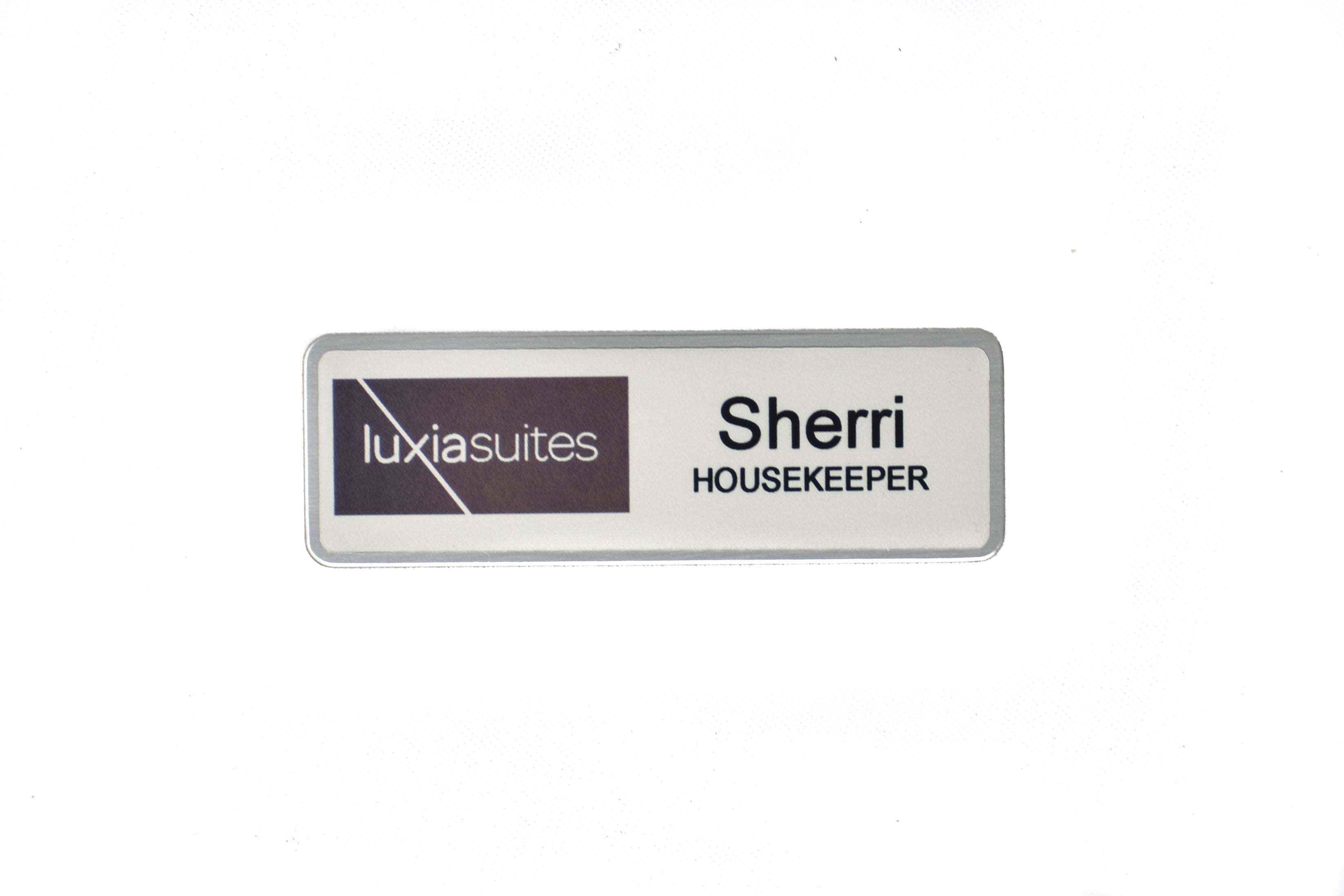
The Gold Preferred Name Tag and Silver Preferred Name Tag are sublimated with full-color logos and text, and they have a polished edge with a frosted front. Pick the finish that matches your brand and your guest experience.
Ordering Your Guest-Facing Name Tags Next
Once you've chosen your size, layout, and material, you're ready to order. Tag UR It! Inc. has no minimum order requirements, no setup fees, and no mock-up charges. Start with the custom employee name tags with no minimum order and build a set that fits your team.
Frequently Asked Questions
How do staff name tags improve guest communication?
Name tags give guests a name to use when they ask for help, which makes the first exchange feel more personal and less formal. Guests can address staff directly without first asking for a name, which shortens the time it takes to get assistance. When staff wear name tags consistently, guests also know who to approach for follow-up requests.
Should hotel employees wear first names or full names on name tags?
Most hospitality teams use first names only, because it signals approachability and matches how guests are likely to address staff. Full names can help in settings where formality or accountability matters, such as a bank or a hospital. Whatever format you choose, apply it to every employee so guests receive a consistent experience. Adding a job title or department below the name helps guests understand which staff member can answer their question.
What material is best for durable hotel staff name tags?
Metal name tags are a durable option for staff who work long shifts and handle frequent wear. Tag UR It! Inc. offers the Gold Preferred Name Tag and Silver Preferred Name Tag at $10.00 each, both sublimated with full-color logos, names and titles. The Satin Silver Aluminum Name Tag at $6.95 and the Glossy White Aluminum Name Tag at $6.25 are lightweight aluminum options in several sizes. Compare material weight, finish and size against your uniform and the environment your staff work in.
Can staff name tags help guests feel more comfortable asking for assistance?
Yes. When a guest can read a staff member's name, it becomes easier to start a conversation and ask for help without hesitation. The name gives the interaction a human starting point, which can reduce the awkwardness some guests feel when approaching someone in uniform. Staff should also be trained to greet guests by name when it is appropriate.
